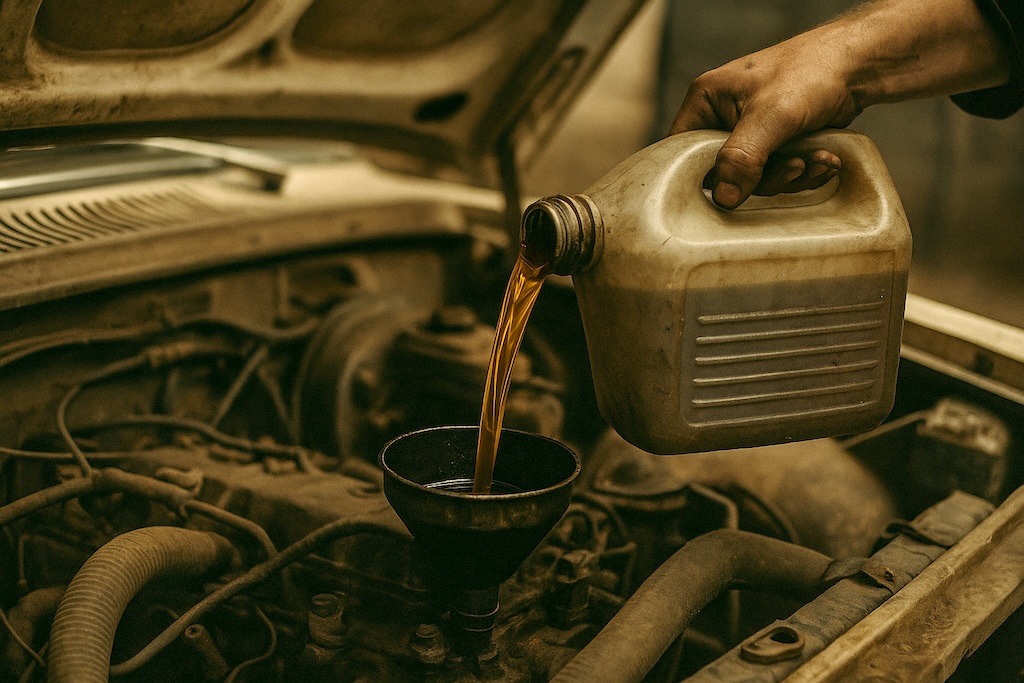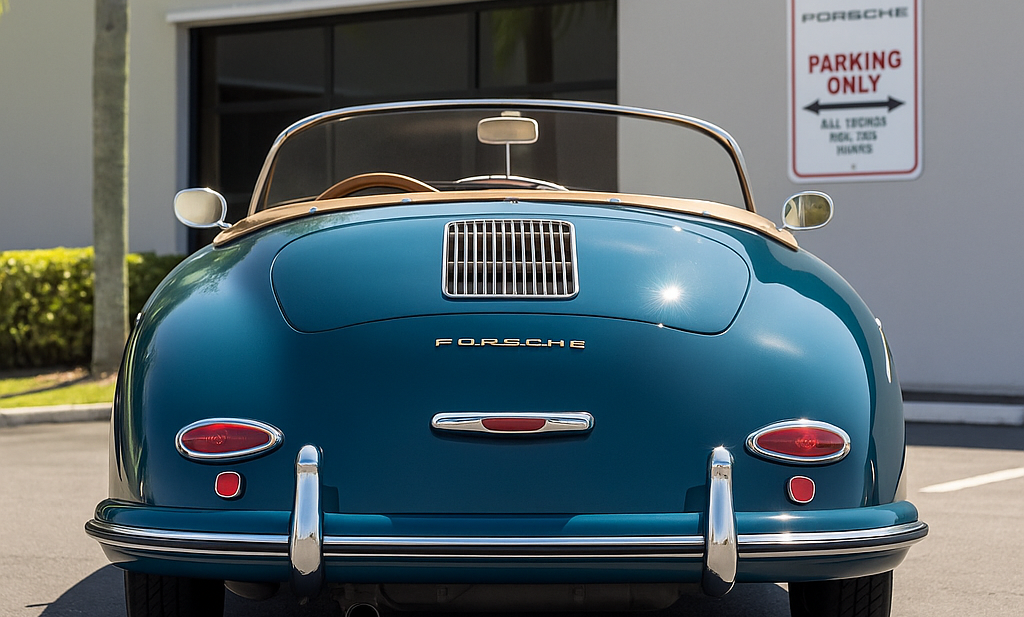
A Subaru boxer is the modern answer to the VW engine in a Porsche 356 replica. It is horizontally opposed, compact, water-cooled and far more powerful than a Type 1, which is why Subaru-based builds have found a following among replica owners. It also means most of what you have read about oil for air-cooled engines no longer applies.
Running a VW Type 1 instead? That engine needs a very different oil, so read our VW and air-cooled engine oil guide. Subaru engines come in several generations and conversions vary, so where your donor manual or conversion builder gives a specification, follow it first.
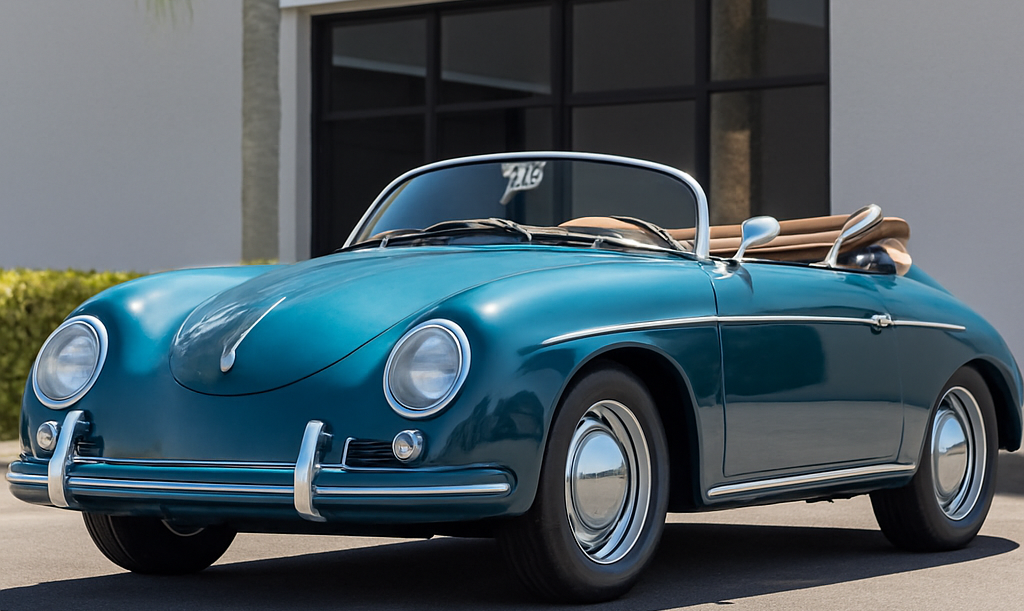
A Subaru Boxer Gives a 356 Replica Modern Power, but the Rear Engine Bay Is Still Small and Hot.
The Key Numbers at a Glance (EJ25)
| Item | Guidance | Notes |
|---|---|---|
| Oil specification | 5W-30, API SN | Conventional or synthetic allowed, synthetic suits a hot bay. |
| Capacity | About 4.4 US quarts with filter | About 4 quarts without. Conversion pans can differ. |
| Oil filter | Subaru 15208AA100 | Listed for the 2.5-litre engine, with 15208AA031 as an alternative. Verify on your donor. |
| Drain plug | M16 x 1.5, 17 mm socket | New crush washer, about 44 N·m (32 lb-ft). |
| Oil and filter change | 3,000-5,000 miles | Or every six months. |
| Timing belt | Commonly 105,000 miles | Interference engine, so do not guess on an unknown belt. |
Subaru and VW: Same Layout, Opposite Lubrication Rules
Both are horizontally opposed and both sit behind the rear axle in a replica. The similarity ends there:
- Cooling. The Subaru has a coolant system, so its oil is not working as a radiator. It still sees heat, because rear engine bays have poor airflow and short trips mean heat soak.
- Zinc. The Subaru was designed for modern API-rated oils, so a racing oil with 1,400 ppm zinc is not needed. That advice belongs to the flat-tappet classic engines we cover elsewhere.
- Viscosity. Subaru specifies a thinner oil than a VW, typically 5W-30 for EJ-series engines. Newer FB-series engines call for thinner grades again, so know which donor engine you really have.
- Filter. A Subaru has a proper spin-on filter, so the strainer routine of an air-cooled VW does not apply.
Choosing Between 5W-30, 10W-30 and 15W-40
Start with the donor engine’s specification and a quality full-synthetic. The alternatives make sense only in specific cases:
| Situation | Oil | Why |
|---|---|---|
| Standard EJ25 conversion, mixed use | Full-synthetic 5W-30 | Matches Subaru’s specification and flows quickly when cold. |
| Tired engine with high mileage | High-mileage synthetic 5W-30 | Seal conditioners help with seepage. |
| Hot climate or track days | Synthetic 10W-30, or a grade your builder approves | More film strength when heat soaks. |
| Builder specifies diesel oil | 15W-40 diesel-rated oil | Follow the conversion shop’s instruction. |
The rule behind all of it: Subaru’s number first, your conversion builder’s number second, internet forums third.
Our Top Oils for Subaru-Powered 356 Replicas
Prices change daily, so check the current price on Amazon. Confirm the grade against your donor engine.
1. Mobil 1 Advanced Full Synthetic 5W-30
The default pick. It matches the common EJ25 specification, handles heat well and is easy to find in 5-quart jugs.
2. Mobil 1 High Mileage Full Synthetic 5W-30
For a donor engine with serious miles. The seal conditioners help slow the seepage older boxers can develop.
3. Mobil 1 Advanced Full Synthetic 10W-30
A slightly thicker option for hot climates or spirited driving, if your builder approves it.
4. Shell Rotella T5 15W-40 (Builder-Specified Only)
A diesel-rated synthetic blend (API CK-4 and CJ-4) for conversions where the builder specifies a 15W-40. It is robust under heat and load, but it is not Subaru’s own recommendation.
Owner Maintenance Schedule
A Subaru conversion is more forgiving than an air-cooled VW, but the engine bay is non-standard, so your own checks matter.
| When | What to do |
|---|---|
| Every drive or fuel stop | Check the dipstick on level ground, the coolant level and the temperature gauge. Look underneath for drips. |
| Every 3,000-5,000 miles or six months | Change the oil and filter, and inspect the drain plug washer and filter seal. |
| Every service | Inspect coolant hoses and clamps, the radiator, fan operation, drive belts and the oil cooler lines. |
| Every year | Check for coolant or oil weeping at the head and block joint, and at the oil cooler and filter fittings. |
| By the donor manual | Replace spark plugs, coolant and the timing belt kit (belt, tensioner, idlers and water pump) on schedule. |
How to Change the Oil and Filter Yourself
- Warm the engine briefly, park on level ground and support the car on jack stands, never on a jack alone.
- Drain the oil. Remove the drain plug with a 17 mm socket and let it drain fully into a pan.
- Fit a new crush washer and refit the plug. The reference torque for the EJ25 drain plug is about 44 N·m (32 lb-ft). Check the figure for your donor engine.
- Remove the old filter, wiping the mounting face clean. Oil the new filter’s rubber seal lightly, and tighten it by hand as instructed on the filter. Do not use a wrench to tighten it.
- Refill with roughly 4 quarts and check the dipstick. Add a little at a time up to the full mark, because the capacity is about 4.4 quarts with the filter and a conversion pan can differ.
- Run the engine for a minute, check the filter and plug for leaks, then shut it off, wait a few minutes and recheck the level.
- Dispose of the old oil and filter responsibly at a recycling point.
Watch the Known Weak Points
- Oil consumption. EJ25 engines can use some oil between changes. Make the dipstick check a habit, because running low is far more damaging than the oil brand.
- Head-gasket seepage. A well-documented issue on the EJ25. Warning signs are coolant loss, white exhaust smoke and weeping at the head and block joint. Keep the coolant topped up and the cooling system sound.
- Timing belt. The commonly quoted interval is 105,000 miles, and the EJ25 is an interference engine, so a snapped belt can wreck the engine. If you do not know the history of the engine, replace the belt, tensioner, idlers and water pump together.
Tools and Supplies Worth Owning
- A new filter and a spare crush washer for each change. Browse Subaru 15208AA100 oil filters on Amazon.
- Drain plug crush washers. Browse Subaru 11126AA000 drain plug gaskets on Amazon.
- A torque wrench for the drain plug. Browse torque wrenches on Amazon.
- A 5W-40 synthetic, if your builder approves it for hot running. Browse 5W-40 full synthetic oils on Amazon.
Conclusion
A Subaru-powered 356 replica is the easier one to feed: follow the donor engine’s specification, use a quality synthetic, change it often, check the level and coolant at every fuel stop, and treat the timing belt as non-negotiable. Save the high-zinc racing oil for the air-cooled VW crowd. For broader reading, see our best engine oils for classic cars, keep the cooling system sorted with our coolant and antifreeze guide, look after the gearbox with our transmission fluid guide, and read the story of the car with the Porsche 911 history.
Affiliate Disclosure: This post contains affiliate links. If you purchase through these links, we may earn a small commission at no additional cost to you. This helps us keep producing valuable content. Thank you for your support!
-
Best Oil for Air-Cooled VW and Porsche 356 Replica Engines (2026)
Running a VW engine in your 356 replica? Zinc, viscosity and break-in oil explained.
-
Best Engine Oils for Classic Cars (2026): Keep Your Vintage Engine Alive
Discover the best engine oils for classic cars and what makes vintage engines different.
-
Porsche 911 History: Why the Immortal Icon Will Never Die
They said putting the engine in the back was a mistake. Six decades later, the Porsche 911 is immortal.